
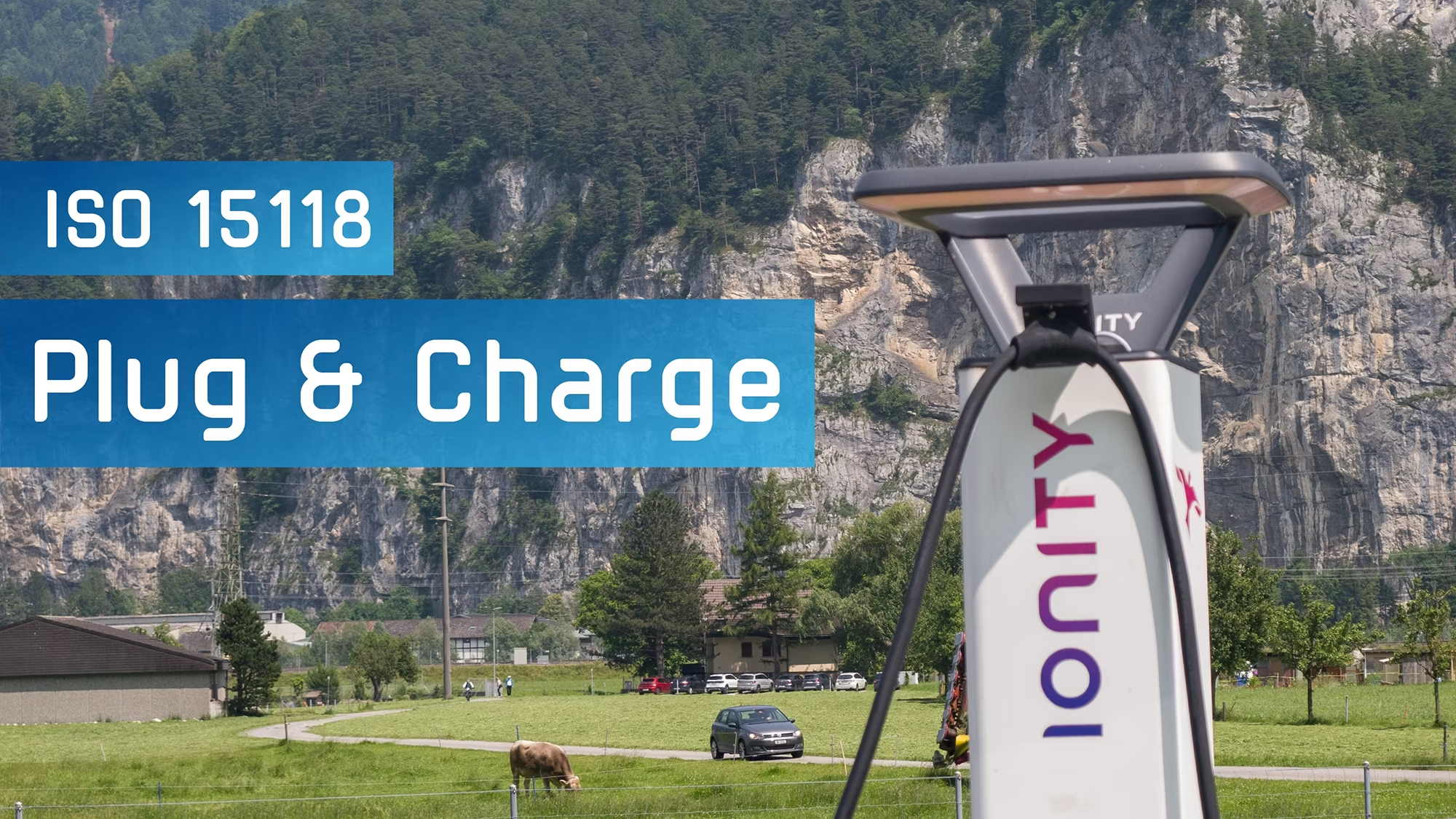
ISO 15118 has fundamentally changed, since January 2026, how electric vehicles communicate with charging stations. For CPOs, this means new obligations, but also great opportunities for competitive advantages if they approach the transition strategically. In this article, you will learn how you can use Plug & Charge to keep your charging stations up to date technically and how place2charge supports you during the transition phase.
What changes with ISO 15118?
ISO 15118 defines the communication standard between electric vehicles (BEV) and charging stations. What was previously a niche technical topic has been mandatory across the EU since January 2026: all newly installed or comprehensively renovated public AC and DC charging points must support the ISO 15118-2 standard. From January 2027, ISO 15118-20 will introduce the next level.
The standard goes hand in hand with the EU regulation AFIR and creates the technical foundation for three key innovations:
- Plug & Charge (already possible with ISO 15118-2): Automatic authentication and billing upon plugging in – without an app, RFID card, or QR code.
- Smart Charging (from ISO 15118-20): Intelligent control of charging power based on grid utilisation, electricity prices, and vehicle requirements.
- Vehicle to Grid (V2G) (from ISO 15118-20): Bidirectional charging – the vehicle feeds energy back into the grid, becoming a mobile storage unit.
In this article, we focus on Plug & Charge technology, as we anticipate it offers the greatest potential leverage and a possible differentiating feature for increased utilisation at your charging stations.
What Plug & Charge means for CPOs
Plug & Charge is the most visible change for end customers. The charging process is reduced to the essentials: plug in the cable, charge, drive away. The charging station recognises the vehicle, authorises the process automatically and bills via the contract data stored in the vehicle.
This sounds like a pure convenience feature – but it is more than that. Plug & Charge removes one of the biggest hurdles at public charging points and the problems surrounding the topic of authentication: from charging stations without mobile network coverage, which means the charging process cannot be initiated via apps, through to fake QR codes. Plug & Charge is also an improvement for barrier-free charging in the sense of AFIR. Anyone who, as an occasional charger or tourist, does not have a suitable app or RFID card will charge elsewhere if in doubt. A charging station that supports Plug & Charge vastly improves the charging experience.
At the same time, Plug & Charge increases security: certificate-based authentication via TLS is significantly more forgery-proof than RFID chips, which can be duplicated comparatively easily.
Important to know: Plug & Charge only works if the vehicle is also ISO-15118-compliant and has a valid contract certificate stored. Vehicle penetration is growing, but not every BEV supports the standard yet. Depending on the vehicle model, an over-the-air update may suffice, as is the case with some Mercedes-Benz models, for example. That is precisely why the timing is right for CPOs now: anyone who installs ISO-15118-capable hardware today will be prepared when the vehicle fleet follows suit across the board in the next two to three years.
What this means for site planning and how place2charge helps
ISO 15118 is not just a hardware issue. The standard changes which charging points are preferentially visited and how usage patterns develop. This has a direct impact on site planning:
- Upgrade Prioritisation: Which existing sites benefit most from an ISO 15118 upgrade? Where many occasional chargers or travellers passing through are charging, the effect of Plug & Charge on utilisation is greatest.
- New Site Planning: For new sites, ISO 15118 compatibility is a requirement anyway – but the choice of location itself determines how strongly the Plug & Charge advantage actually translates into utilisation.
- Monitoring: How is utilisation developing at ISO 15118-capable sites compared to older charging points?
This is precisely where place2charge comes in. Via the platform, CPOs keep track of which sites are already ISO 15118-capable and where an upgrade has the greatest leverage on utilisation. Through data-driven site analysis, you can invest in a targeted manner where the technological advantage also makes the greatest economic difference – and position new sites optimally from the outset.
Conclusion: Prepare now, before the standard becomes a hygiene factor
ISO 15118 will move from a differentiating feature to an expected standard in the coming years. CPOs who invest now in ISO 15118-capable infrastructure and align their site strategy accordingly are securing a head start – before charging points without Plug & Charge are perceived as outdated.
place2charge supports you in planning this transition on a data-driven basis and making the added value of ISO 15118 concretely measurable for your charging network.
Find out how place2charge can support your team in fulfilling further AFIR regulations here.